
金枝欲孽2
‘Let traditional Chinese patterns shine with new splendor,’ says Chang Shana, former president of the Central Academy of Arts and Design_我的网站

一 |
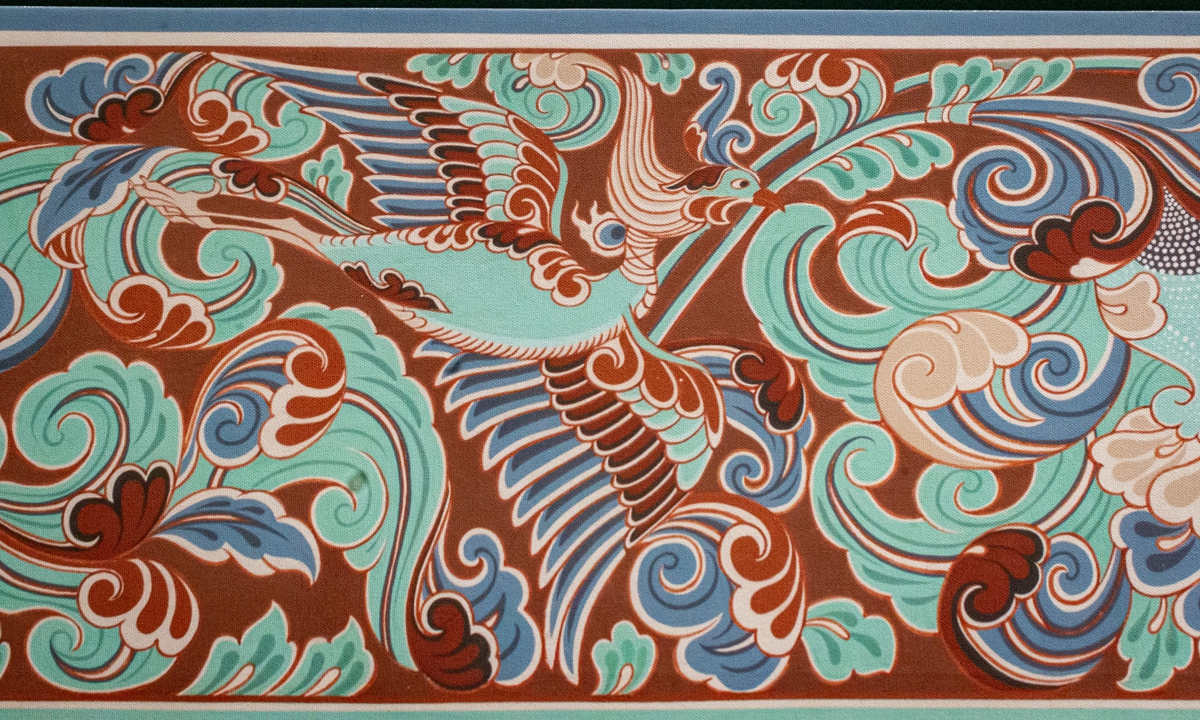
As an important part of Dunhuang art, decorative patterns are the carriers with the most rigorous compositional principles and the richest cultural spirit.
In the Dunhuang caves of Northwest China, there are numerous floral, cloud, flame, animal, and other decorative patterns. These patterns come from different periods and are found on and in structures and forms such as caisson ceilings, canopies, halos, costumes, border decorations and floor tiles, blending with statues, murals and architectural space.
Such patterns not only organically and harmoniously enriched and decorated murals, painted sculptures and entire caves, making them more splendid and perfect, but also developed their own period styles and characteristics, vividly recording the formation, change and development of Chinese decorative art and reflecting the social culture and customs of different times.
From the Sixteen Kingdoms (304-439) period through the Sui (581-618) and Tang (618-907) dynasties and beyond, Dunhuang cave mural art continued to evolve in both content and form with the changing times, and decorative patterns changed accordingly. From the three-petal leaf and honeysuckle patterns of the Northern Wei (386-534) to the scrolling-grass, baoxiang flower and linked-pearl patterns of the Sui and Tang and the medallion floral patterns dominated by mineral green in the Western Xia (1038-1227), Song (960-1279) and Yuan (1279-1368) periods, the pattern forms and color systems of different eras together form the historical lineage of Dunhuang decorative patterns, and also reflect the continuity and creativity of Chinese art.
I once led students in forming a research group on "Chinese Decorative Patterns of Dunhuang Through the Ages," systematically collecting, organizing, classifying and copying the decorative patterns on Dunhuang murals and painted sculptures, including the motifs. Through this sorting and copying, we conducted in-depth research and gained a full understanding of the historical culture, artistic features and decorative effects of each type of Dunhuang pattern, and clarified the causes, characteristics and historical evolution of each type. This is the "source" for contemporary design application.
Traditional patterns are an important source of inspiration for my designs. In design, on the one hand, the original appearance of traditional patterns should be preserved to a certain extent; on the other hand, they should be summarized, simplified, extended or enriched to make them more modern.
The ceiling pattern of the banquet hall of the Great Hall of the People was inspired by Tang Dynasty caisson patterns from Dunhuang. With a lotus as the center of the ceiling, and in line with the functional needs of the architectural structure, lighting and ventilation, it combines Dunhuang floral patterns with modern functions to create a spatial decoration with a distinctive national style. This design remains regarded as a model of the contemporary expression of traditional patterns.
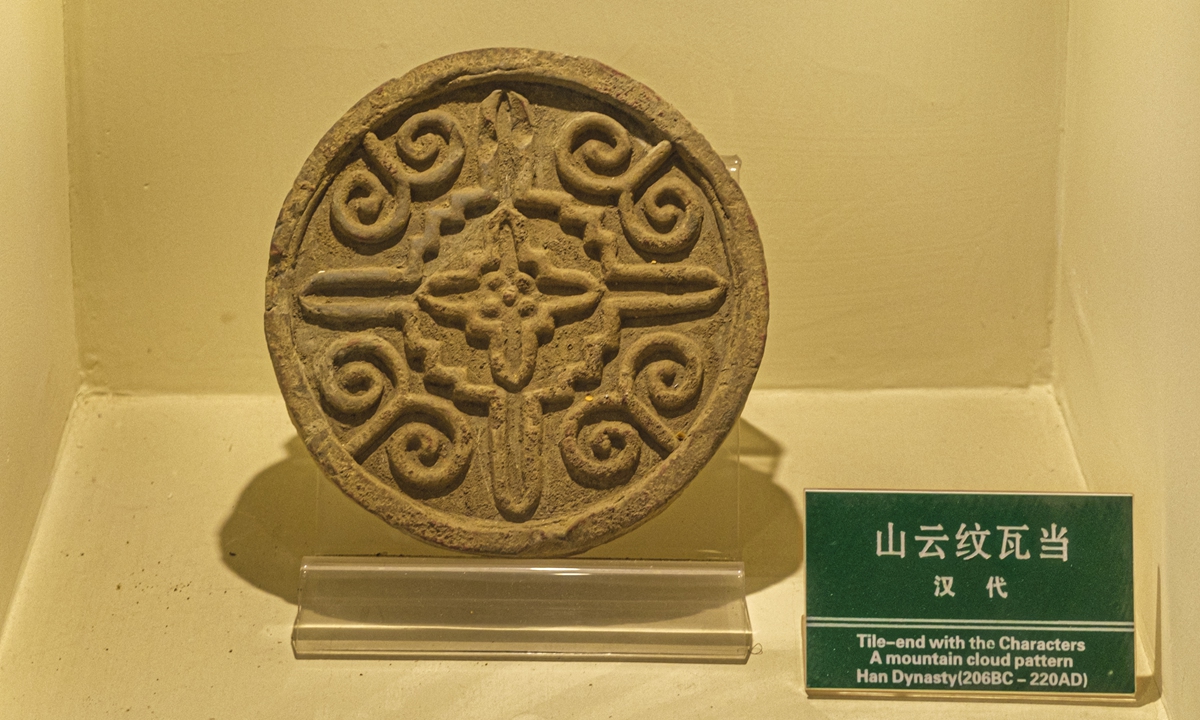
I was invited to serve as artistic consultant for the creative program "Nian Jin" (Auspicious Brocade) at China Media Group's 2024 Spring Festival Gala for the Year of the Dragon. Through natural patterns such as mountains and clouds of the Han Dynasty (206BC-AD220), bird and animal patterns such as flying phoenixes and auspicious lions of the Tang Dynasty, floral patterns such as peonies and laurels of the Song Dynasty, and auspicious patterns such as gourds and lanterns of the Ming Dynasty (1368-1644), we enabled the audience to appreciate the aesthetic tastes passed down by the Chinese people over thousands of years and the breadth and depth of fine traditional Chinese culture.
In contemporary society, as standardized, mass-produced industrial products have become dominant, people hope to find forms that reflect their own national cultural language and are distinctive, warm and pleasing. Traditional patterns can make people feel the depth of history and emotional warmth, and can further embody the cultural character of their nation through modern design.
The study and innovation of decorative patterns is a highly practical part of inheriting and promoting fine traditional Chinese culture. It concerns not only vision and beauty, but also cultural attitudes and identity. These patterns are not just a form of heritage found on murals or on other cultural relics; they can enter our daily lives and become cultural symbols in fabrics, utensils, spaces and even digital interfaces.
I believe that more and more later generations engaged in art and design will, on the basis of promoting fine traditional Chinese culture and adapting to people's current needs for culture, art and a better life, take innovative steps to create a new style of modern design art with Chinese characteristics - one that is national, scientific and popular, so that traditional Chinese decorative patterns can constantly generate new vitality and shine with new splendor.
The author is former president of the Central Academy of Arts and Design. This was compiled and translated by the Global Times English edition based on an article published by the People's Daily Overseas Edition on August 20.
。

二 | 武汉8月25日电 (梁婷 潘庆芳)记者25日从2026年加快建设交通强国大会获悉,依托近洋直航与陆上铁路、航空枢纽互补,湖北形成“海陆空多向联动”的国际物流格局。 湖北位于中部之中、长江中游,该省“铁水公空”运输方式齐备,承担着连通东西部、对接海内外的超大规模物资中转枢纽功能。 目前,万吨级船舶可常年直达武汉,汉江实现襄阳以下千吨级航道贯通。2025年,三峡水运新通道工程开工,汉湘桂内河航运大通道湖北段全面启动。

三 | 今年4月,长江中游荆江河段航道整治二期工程主体工程全面交工验收。 据介绍,湖北构建“汉亚直航”近洋航线,并与中欧班列(武汉)衔接,构建起“日韩一武汉一欧洲”双向国际物流大通道。目前,汉亚直航通达5个国家9个港口。全省建成23条集疏运铁路,长江干线4个主要港口实现铁路100%衔接。 此外,湖北加快建设鄂州花湖国际机场铁路联络线,打通航空与铁路集疏运关键节点。 数据显示,2025年湖北港口吞吐量8.08亿吨,位居中国内河第二;亿吨大港增至5个,位居中国内河第一;武汉港外贸箱量突破87万标箱。 当前,武汉阳逻港依托“港站同场、运输同场、关检同场、信息同场”一体化模式,效率提升30%。宜昌白洋港疏港铁路直连栈桥,单箱转运时间压缩60%以上。“长江班列”将三峡过闸货物以铁路分流,运输时间从近10天压缩至3天内。
Current article:http://jk9.ruwentaqintiaozhupapaigai.shop/3iglt/20260826/4094.html
Published on:10:20:58


